
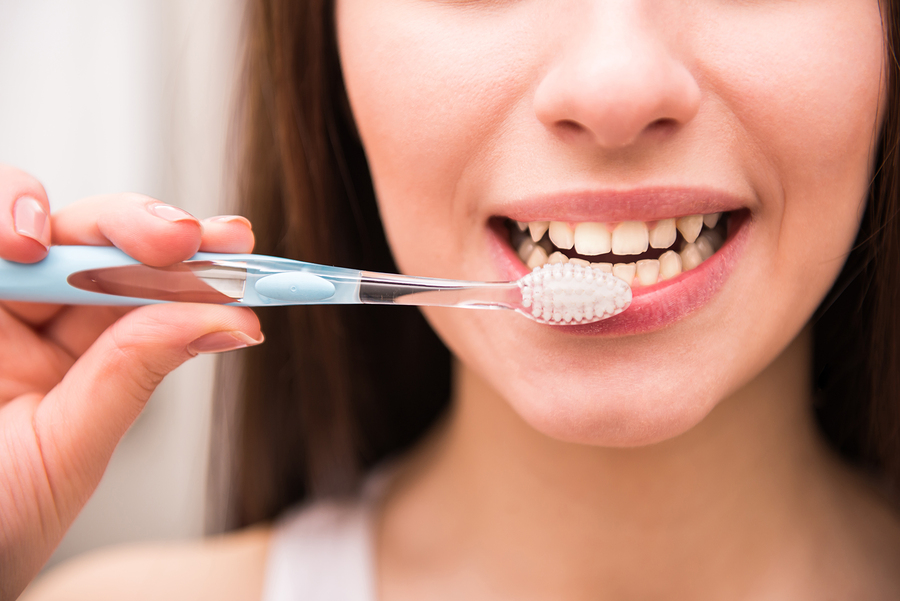
After you eat, bacteria production is increased by the breakdown of food particles in and around your teeth, which can cause a foul odor. Additionally, after you digest certain foods such as onions and garlic, the odors are carried to your lungs, which will affect your breath as well. To avoid these problems, keep a toothbrush with you to use after eating. Toothpaste that contains fluoride or antibacterial properties can also help reduce bad breath after meals.


Stainless steel is known for its ability to help neutralize unpleasant odors. The metal forms a thin, stable layer of chromium oxide on its surface that can bind with and help break down sulfur-containing compounds, which are often responsible for foul smells. This is why stainless steel "odor-removing" bars are sometimes used in kitchens after handling garlic, onions, or fish. While a stainless steel tongue scraper doesn't directly freshen breath through the metal alone, it provides a durable, non-porous surface that effectively removes the bacteria, food debris, and dead cells that accumulate on the tongue. By physically removing the coating where these bacteria thrive, the source of bad breath is removed rather than simply masking it with mints or mouthwash.



There are a number of things that can naturally help freshen your breath. For example, a fresh sprig of mint or basil contains chlorophyll that neutralizes mouth odors. Also, the citric acid found in lemon or orange rinds will stimulate the salivary glands to help stave off dry mouth. Finally, a handful of fennel seeds or cloves have antiseptic qualities that can fight halitosis-causing bacteria.